3 May 2015

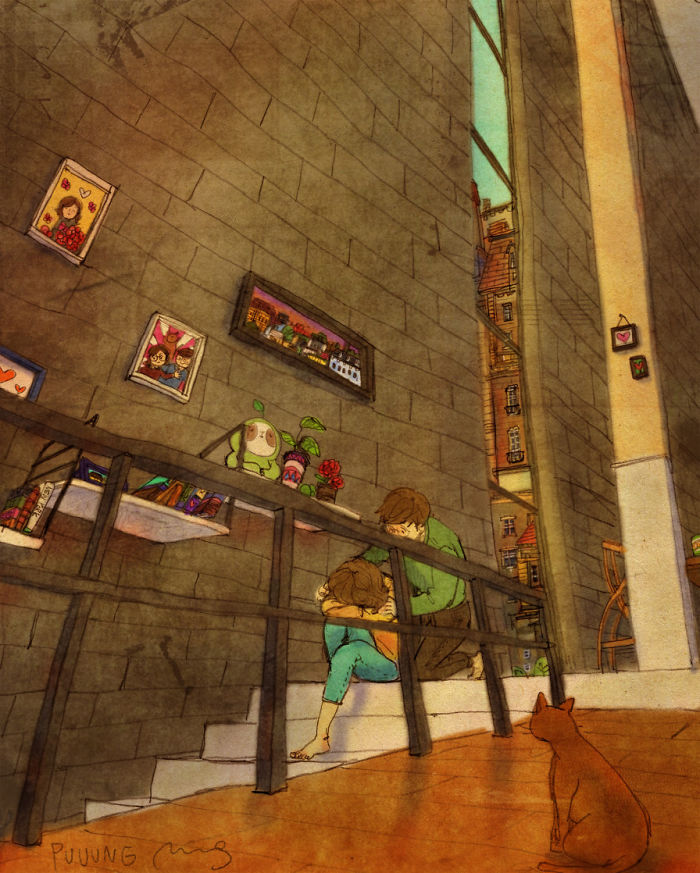
Love is in small things


www.boredpanda.com/love-is-illustrations-korea-puuung/

Love is a complex area to look at in drama with young people. These illustrations could help draw attention to those tiny 'caught' moments, that may seem inconsequential, but have a warmth and beauty to them.

Often when buidling work in the style of movement specialists, such as frantic assembly, moments as small as these are sought and then developed into pieces with emotional weight.

15 February 2014

Accents App

Learning accents is a task best supported by trained vocal coaches, but as a drama teacher there are methods that can be used in the classroom.

I have long been a fan of the fine vocal technique books by the likes of Patsy Rosenburg. More recently the BBC and British Library have provided recordings which I've used to examine different voices and define the specific features of accents.

A new app has now appeared which helps support the learning of accents. I was particularly impressed with this easy to follow guide to learning accents:

http://www.ideastap.com/ideasmag/the-knowledge/catherine-weate-how-to-do-accents

23 November 2013

International Drama Resources - Ontario

There are many places to look online for drama teaching resources. Many people will share on websites such as TES (http://www.tes.co.uk/). However, it can be difficult to find quality materials quickly.

With the recent enlightened changes to US arts standards (http://nccas.wikispaces.com/About+Us), I have been looking further a field for resources related to assessment as well as teaching and learning.

For some time Ontario has been leading the way in curriculum development for the arts (http://www.edu.gov.on.ca/eng/curriculum/elementary/arts18b09curr.pdf). Following my nose in this direction I came across the Council of Ontario Drama and Dance Educators (CODE, http://code.on.ca/resource). The resources on offer cover students across all years.

One resource that I would recommend is this lesson on Laban: http://code.on.ca/resource/acting-course-profile#section-3. Having taught a range of skills related to Laban in drama lessons I was excited to find further areas to explore. I was particularly impressed with the depth and range of questioning.

The model of lesson planing appears similar to the UbD model (http://www.amazon.co.uk/Understanding-Design-Guide-Creating-High-Quality/dp/1416611495) which I have found very useful when structuring programmes of study.

If there are international educators following this blog then please do share your links to quality resources.

27 October 2013

A letter to the Secretary of State of Education on 27 October 2013.

Dear Rt Hon Michael Gove MP,

I hope you are having a pleasant Sunday.

I would like to know the Governments stance on the changes to GCSE's, in particular Drama. Ofqual have been quoted in the following article in reference to the 'scrapping' of subjects perceived by the government as 'soft':

http://www.thesundaytimes.co.uk/sto/news/uk_news/Education/article1332693.ece

As a drama teacher at a Secondary comprehensive in South London I am shocked that such a proposal could be considered. Drama is a subject that has a solid grounding in the cultural history of our country. It develops a knowledge of the art form as well as the vital analytical and evaluative skills that underpin scholarship across all the arts. The recent Henley report, which was welcomed by your department, highlighted the need for cultural learning within the curriculum and yet these new proposals would put an end to it.

There is real rigour not only in the 60% practical element of the GCSE but also the 40% written assessment. With AQA there is a written exam and the statistics show it is by no means easier to pass the exam compared to any of the other Arts of Humanities.

Step into my school and see students analysing the social and political changes in America and how that impacted on plays and literature. Or see the latest in contemporary British theatre being used to understand the changing political nature of the country and how that has changed the lives of people in different communities. There are GCSE students creating theatre using a biography of Alan Turing. They are learning about an unsung hero, his codebreaking, the effect of anti-homosexual laws on individuals. All this is explored through an art form that grew out of our greatest playwright and was sold around the world last year thanks to the Olympic opening ceremony, and this year a thriving National Theatre celebrating 50 years. Without GCSE drama the London theatre landscape would be depleted. Not simply the artists, who would gladly walk out of the great public schools and into theatres, but the audience. The London theatre audience has grown since Labour's investment in the arts took hold and money was spent in bringing in new audiences (e.g. One night only scheme). Without young minds exploring the nature or drama, the great classic plays and the even greater voices from their community the audience will most certainly diminish. If young minds don't have the opportunity to judge performance, draw out it's links to social, cultural and political history then they will be in a weaker position as global citizens. The analytical process brings with it an empathetic understanding of those around us and that is useful not only to the emerging doctor or artist but also to the future law, literature or philosophy student.

As a Drama teacher I am not adverse to change. In fact, I would advocate a change in assessment that meant all exam boards should sit written exams for 40% of the final grade (like AQA). This would mean 60% would continue to be performance. This position was explored recently by OfQual I believe and they stated that Drama should keep some of it's non-exam features.

I hope the points I have raised have provided some context to my concern. I would appreciate clarity on the government's position on changes to GCSE Drama.

Kind Regards,
Quin Golding
West Norwood, London

4 January 2013

Pocket Shakespeare (from Propeller)

http://propeller.org.uk/play/pocket-henry-v#/menu
I have read countless 'Teacher Packs' or suggested lessons to run alongside professional productions. These are invariably poor, especially when it comes to Shakespeare (Find one without a biog of his life for the first 2 pages).

I was therefore pleasantly surprised when I came across this microsite from Propeller called 'Pocket Henry'. It contains information about different production elements as well as drawings, audio and photographs of the production process. Not only is it well presented but the information behind it is useful. You may be particularly interested design section which show the process from sketcing, the creating a model box and then the final design.

Find out more here: http://propeller.org.uk/play/pocket-henry-v#/menu

IF you come across any similar resources of this kind please comment.

18 December 2012

TED Ed

For some time TED talks have been leading the way in providing engaging lectures on a wide variety of topics.

TED recently teamed up with animators to take the Ted talk and put it into a new form. Here we have an introduction to the great Joseph Campbell's views on myths and heros:

Watch "What makes a hero? - Matthew Winkler" on YouTube

25 November 2012

Improvisation scenarios

Improvisation scenarios can come in handy when your mind goes blank. This website from Jon Thrower features a good selection of scenarios and suggested strategies:

Digital Theatre Journal

Excellent blog from Digital Theatre featuring films and interviews with theatre professionals.

6 October 2012

The V&A theatre & performance resources

The V&A offer some excellent resources in regards to theatre history and theatre practitioners. Follow the links for more information:

9 July 2012

National Theatre Digital Classroom


Find out about the huge expansion in online learning resources from the National Theatre.